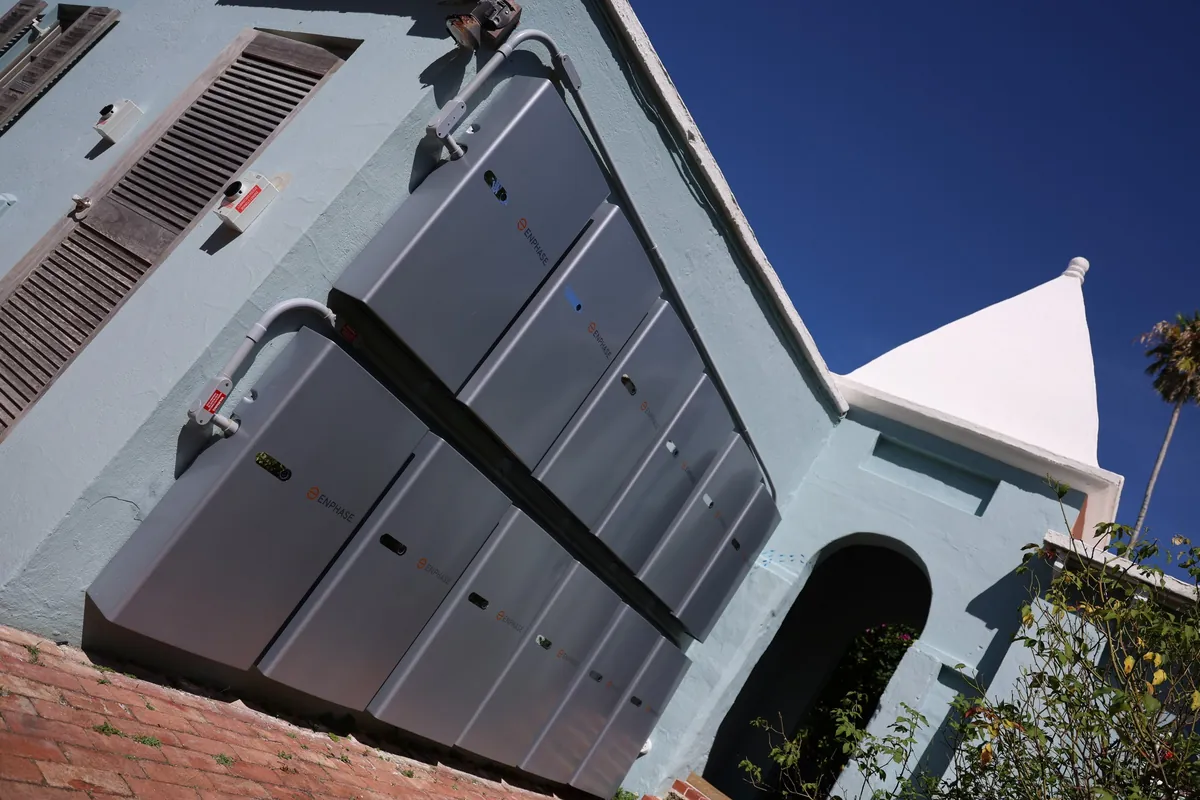
Last October, two hurricanes passed Bermuda four weeks apart. After each one, around half the island woke up without power. Most homes were back within a day. Some waited longer. A home with a battery barely noticed. This is what actually happens in an outage when a house has one, what it keeps running, and how to get the most from it before the next storm.
What last October showed
Hurricane Imelda passed at the start of October 2025. At the peak, about 18,000 customers were without power. Crews restored more than 17,000 within 24 hours, and the last few hundred took longer, held up by fallen trees and scattered faults.
Hurricane Melissa followed at the end of the month. About 19,000 customers lost power, around half the island. By 11 pm that day about 17,200 had it back, but five poles had come down, and each one took four to eight hours to replace.
The crews did well. But a fast restoration still means a night without power for thousands of homes, and the last streets back are always the ones with the most damage. That is the night a battery is for.
Why solar alone goes dark in an outage
Many people are surprised to learn that a standard solar system switches off when the grid goes down, even in full sun. It is a safety requirement. Line crews repairing the network need to know no home is feeding power back into the lines they are working on, so a grid-connected system without a battery shuts down until the grid returns.
Solar on its own saves you money every day. It is the battery that keeps your lights on when the grid is down.
With an Enphase battery, the system disconnects your home from the grid and runs it as its own small, safe island. Your panels keep producing, your home keeps running, and nothing is sent back into the lines.
The moment the grid drops
When the grid goes down, the system switches your home over to the battery automatically. Nobody has to be home, flip a switch, start an engine or carry fuel. Most of the time, the first sign of an outage is the neighbours' houses going dark.
When the grid comes back and is stable, the system reconnects on its own and goes back to normal: solar first, battery in the evening, the grid only for what is left.
What a battery keeps running
An Enphase IQ Battery 10C stores 10 kWh and can deliver 7.08 kW continuously. In practice that means the parts of the house you actually need through an outage, for a long time:
| What runs | Typical use per day |
|---|---|
| Refrigerator and freezer | 1 to 2 kWh |
| Water pump from the tank | 0.5 to 1 kWh |
| LED lighting through the evening | 0.5 to 1 kWh |
| Ceiling fans | 0.5 to 1.5 kWh |
| Internet, phones and laptops | about 0.5 kWh |
| Television | 0.3 to 0.5 kWh |
| Essentials, all together | about 3.5 to 6.5 kWh |
On those figures, one fully charged 10C carries the essentials of a typical home for a day and a half to nearly three days, before the sun even comes into it. Every home is different, which is why we size a battery from what your house actually uses, not from a rule of thumb.
The water pump deserves a mention of its own. Homes in Bermuda draw their water from a tank through an electric pump, so an outage means no water pressure as well as no lights. On a battery, the taps and the shower keep working.
Air conditioning, the oven, the dryer and the water heater are the heavy loads. A battery can run some of them, but each one draws a large share of what it stores. In a long outage the sensible approach is to keep them off or use them briefly, and let the battery carry the house through the evening and the night.
When the outage lasts days
This is where solar and a battery together are far more than either one alone. Each morning, the panels start producing again and recharge the battery while also running the house. By evening the battery is full again, ready for the night.
A generator runs out of fuel. A solar battery refills itself every morning.
After a storm, the skies usually clear quickly. So for a home with solar and a battery, a multi-day outage becomes a daily rhythm: the sun runs the house and fills the battery, and the battery runs the house overnight. There is no fuel to find, no noise, no fumes and no extension leads through the window.
Before a storm
A battery helps most when it is full as the weather arrives. Enphase Storm Guard charges the battery to full ahead of severe weather, so it is topped up before the wind picks up and ready the moment the grid drops.
A short checklist for battery homes
- Check the Enphase app a day or two out. You can see the battery's charge, and your solar production, live.
- Finish the laundry, the dishwasher and anything else heavy before the storm, while the grid is still up.
- Once the power goes, keep the heavy loads off and let the battery carry the essentials.
- After the storm, watch the app. On the first sunny morning you will see the battery start to refill.
One battery or more
The Enphase IQ Battery 10C is modular. One unit covers the essentials. Two or three carry more of the house, for longer, and run heavier loads more comfortably. Units can also be added later, so a home can start with one and grow.
A battery can be added to a new AES system or to the solar you already have, whoever installed it. When we design one, we look at what your home uses, through the day and through the evening, and decide with you which parts of the house the battery carries in an outage.
The same battery that carries you through a storm also works every ordinary evening, storing the power your panels make in the day so your home uses it at night. Outage cover is the part people notice. The everyday saving is the part that adds up.
Frequently asked questions
Does my solar keep working in a power outage?
Not on its own. A grid-connected solar system without a battery switches off when the grid goes down, even in full sun, so it cannot feed power into lines that crews are repairing. With an Enphase battery, the system separates your home from the grid and keeps running it, and the panels keep producing and recharging the battery.
How long will a 10 kWh battery last in an outage?
It depends on what you run. The essentials of a typical home (refrigerator, water pump, lights, fans, internet and phones) use roughly 3.5 to 6.5 kWh a day, so one full Enphase IQ Battery 10C carries them for a day and a half to nearly three days without any sun. With solar recharging it each morning, it keeps going for as long as the outage lasts.
Can a battery run my air conditioning?
It can run some air conditioning, but air conditioning uses a large share of what a battery stores. In a long outage, most households keep the heavy loads off and let the battery carry the essentials through the evening and night. Homes that want more of the house backed up add a second or third battery.
Do I have to do anything when the power goes out?
No. The system switches your home to the battery automatically and switches back when the grid returns and is stable. You can watch it all happen in the Enphase app.
Can I add a battery to solar I already have?
Yes. AES adds Enphase batteries to new AES systems and to existing solar, whoever installed it. We look at what your home uses through the day and the evening and size the battery to it.
Start with a site visit.
We look at the roof, read a year of your bills and come back with a proposal designed for your home. Flexible payment plans available.