

Solar panel cost in Bermuda isn't a single number. It depends on system size, panel type, roof complexity, and whether you add battery storage, and AES doesn't publish a fixed price list because a fair quote depends on your actual roof. What changed recently isn't the equipment side of that equation, it's the electricity rates the payback math is built on. BELCO restructured its residential rates on August 1, 2026, and the new structure changes what solar is actually worth, in some cases significantly.
What Actually Determines Solar Panel Cost in Bermuda
A handful of variables move the price more than anything else.
System size. A bigger system covering more of your usage costs more upfront and saves more over time. Sizing against your actual kWh usage, not a rule of thumb, is where an accurate quote starts.
Panel type. AES installs monocrystalline Maxeon panels exclusively, priced higher than polycrystalline alternatives, but monocrystalline's lower temperature coefficient means it holds up better under Bermuda's sustained rooftop heat, a real performance difference, not just a spec sheet number, as covered in our guide to how solar panels work in Bermuda.
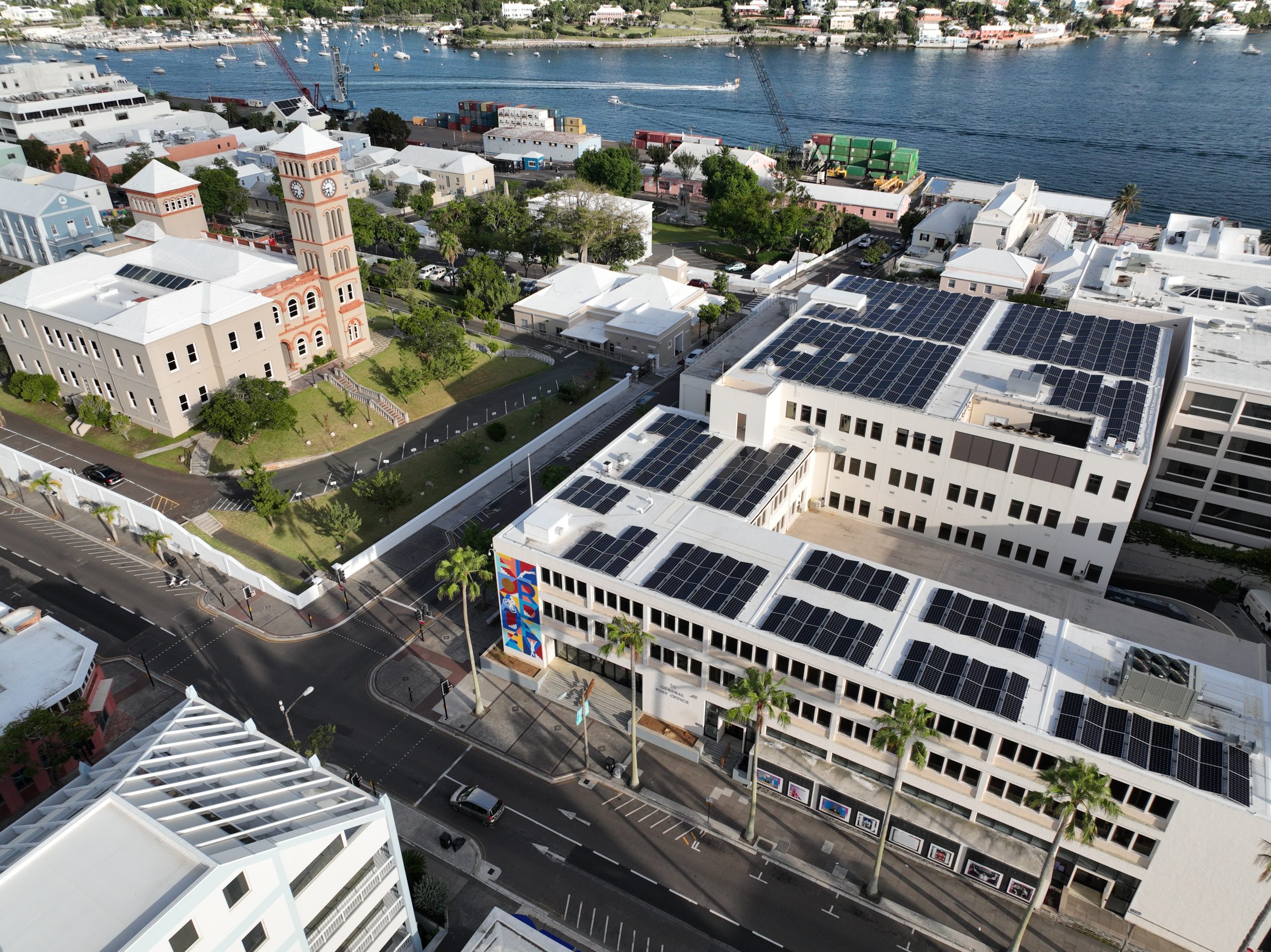
Roof complexity. Bermuda's stepped, whitewashed limestone roofs are built for rainwater catchment first. Mounting hardware and panel layout have to preserve the roof's water-channeling function and avoid introducing contaminants into a potable water system, which takes more careful (and sometimes more expensive) installation work than a standard asphalt roof.
Battery storage. Adding a battery increases upfront cost but changes what your system is worth under the current rate structure, covered in the self-consumption section below.
Inverter choice. AES uses Enphase microinverters rather than a single string inverter. That's a design decision more than a major cost swing, but it affects how a shaded or multi-angle roof performs, which affects your real-world output and therefore your real payback timeline.
None of this produces a single Bermuda-wide price per watt worth publishing, and treating one as reliable would be more misleading than useful. The honest answer is that an accurate number for your roof comes from an actual site assessment, which is what a free in-home estimate is for.
What AES's Own Numbers Say
AES's own site states a few aggregate figures worth knowing going in: an average return on investment of 18%, a typical payback period of 5 years, and a 40-year warranty on Maxeon panels covering panels, shipping, and labor. AES also states its customers have saved over $400,000 on their electricity bills in aggregate.
AES's own published figures point to an average 18% ROI and a roughly 5-year payback period across its installed base.
These are AES's own published figures, not independently audited numbers, and where you land within that range depends on your system size, your usage tier, and now, the new rate structure below. Treat them as a benchmark for what a well-sized system in Bermuda can do, not a guarantee for any specific roof.
The August 2026 BELCO Rate Change, in Brief
On August 1, 2026, BELCO unbundled its rates, separating what you pay to generate electricity from what you pay to move it across the grid, and restructured the facilities charge (the fixed monthly fee that funds grid maintenance) into five tiers based on average daily usage. The change was approved by the Regulatory Authority of Bermuda.
The part that matters most for solar: BELCO also introduced a new flat facilities charge specifically for Distributed Generation customers (homes with rooftop solar), $148.83 a month, up from $52.48. That's a real increase, and it directly shapes the math in the two tables below.
The Real Marginal Value of a Kilowatt-Hour
Your BELCO bill isn't one price, it's three energy rates stacked with the Fuel Adjustment Rate and a small Regulatory Authority fee on top, and which block you're in determines what a kilowatt-hour is actually worth to avoid.
| Where the kWh Falls | Energy Rate | + Fuel Adjustment | + RA Fee | True Marginal Cost |
|---|---|---|---|---|
| First block (0-250 kWh) | $0.14520 | $0.14226 | $0.00556 | $0.29302 |
| Second block (251-700 kWh) | $0.25611 | $0.14226 | $0.00556 | $0.40393 |
| Tail block (700+ kWh) | $0.39504 | $0.14226 | $0.00556 | $0.54286 |
A kilowatt-hour avoided in the tail block is worth close to double one avoided in the first block. That's the single most important number for sizing a system: solar is worth the most to households whose usage regularly runs into that top block, not because the panels perform differently, but because the electricity they're offsetting is priced highest there.
Self-Consumption vs. Export: Why It Matters More Than It Used To
BELCO's Feed-in Tariff, what you're credited for power your system exports back to the grid, is 11.370 cents per kWh. Compare that to the 54.286 cents per kWh you avoid by using your own tail-block electricity instead of drawing it from BELCO.
Consuming your own solar output is worth roughly 4.8 times exporting it.
That gap is why system design matters as much as system size. A system sized to spin the meter backward isn't optimizing for what the current rates actually reward. A system sized around your real daytime usage, with loads shifted into daylight hours where practical and battery storage seriously modeled rather than treated as an add-on, captures far more value under this structure than it would have a year ago. It's a genuine reason an Enphase IQ Battery deserves a harder look now than it did before August.
The Facilities Charge Math for Solar Households
The new $148.83 Distributed Generation facilities charge is flat, it doesn't scale with usage. So its real cost depends entirely on what you'd otherwise be paying without solar.
| Your Usage Tier | Non-Solar Facilities Charge | DG Facilities Charge | Real Monthly Impact |
|---|---|---|---|
| Tier 5 (50+ kWh/day) | $148.83 | $148.83 | $0.00 |
| Tier 4 (25-50 kWh/day) | $97.91 | $148.83 | $50.92 |
| Tier 3 (15-25 kWh/day) | $62.59 | $148.83 | $86.24 |
| Tier 2 (10-15 kWh/day) | $47.00 | $148.83 | $101.83 |
| Tier 1 (0-10 kWh/day) | $31.33 | $148.83 | $117.50 |
A household already in Tier 5 sees zero incremental facilities-charge cost from adding solar, their charge doesn't change at all. A light-usage household in Tier 1 absorbs the biggest relative hit. This is the piece most general "solar cost" content misses entirely, because it's specific to how Bermuda just restructured this fee, and it's exactly why a generic mainland payback calculator won't give you an accurate answer for a Bermuda roof.
A Worked Example
Take a household using roughly 60 kWh a day (about 1,800 kWh a month), which lands solidly in Tier 4 without solar. A well-sized system that covers a meaningful share of that usage directly, rather than one sized purely to maximize export, is offsetting electricity priced at the tail-block rate of 54.286 cents per kWh for every kWh it keeps the household from buying, and it moves them onto the flat $148.83 DG facilities charge instead of the $97.91 Tier 4 charge, a real but comparatively small $50.92 monthly cost that a well-designed system's savings should absorb many times over.
The exact numbers depend on your system size, your actual usage pattern, and how much you're able to shift into daylight hours, which is precisely why AES models the new facilities charge and Feed-in Tariff against your real bill during a free in-home estimate rather than relying on a rule-of-thumb calculation. If you're a lighter user in Tier 1 through 3, that same exercise is worth doing before assuming solar's payback timeline looks the way it did before August, the math has genuinely shifted for you too, just in the other direction.
Getting an Accurate Number for Your Own Roof
Every figure above is about what solar is worth to consume or export. None of it substitutes for an actual quote on what a system costs to install on your specific roof, which depends on your roof's shape, shading, catchment layout, and the system size that actually fits your usage. AES doesn't publish a fixed price list because a number that ignores those variables isn't a useful number, it's a guess dressed up as a fact.

Common Myths and Mistakes About Solar Cost in Bermuda
- "Solar pays for itself the same way everywhere." Not in Bermuda specifically, not after August 2026. The DG facilities charge and the tiered energy rates mean your usage pattern, not just your system size, drives your payback timeline.
- "A bigger system always means a better return." Only if it's sized against real usage. Oversizing for export value alone now yields far less than it did, since the Feed-in Tariff is worth a fraction of self-consumption.
- "The facilities charge increase makes solar not worth it." For light users, it's a real headwind worth taking seriously. For households already in the higher usage tiers, it's close to a non-issue, since their facilities charge barely changes or doesn't change at all.
- "Online mainland solar calculators will give me an accurate Bermuda number." They won't. Bermuda's rate structure, tiered energy pricing plus a separate flat DG facilities charge, doesn't match how most calculators, built around single flat utility rates, model payback.
- "Battery storage is optional if I just want savings." It's optional, but under a rate structure where self-consumption is worth close to 5 times export, battery storage is one of the more direct ways to capture value your system would otherwise export at a fraction of its worth.
Frequently Asked Questions
How much do solar panels cost in Bermuda?
There's no single Bermuda-wide price, it depends on system size, panel type, roof complexity, and whether you add battery storage. AES provides a free in-home estimate rather than a fixed price list, since an accurate number depends on your actual roof and usage.
What's a typical solar payback period in Bermuda?
AES's own published figures point to roughly 5 years on average, with an average 18% ROI, though your actual timeline depends on your usage tier and how your system is sized under the current rate structure.
How did BELCO's August 2026 rate change affect solar payback?
It changed both sides of the equation. Energy rates dropped slightly across all three residential blocks, but a new flat $148.83 Distributed Generation facilities charge (up from $52.48) applies to solar households regardless of usage, so the real impact depends heavily on what tier you were in before going solar.
Is exporting solar power to BELCO still worth it?
Less than it used to be, relatively speaking. The Feed-in Tariff is 11.370 cents per kWh, while avoiding tail-block electricity by consuming your own solar output is worth roughly 54.286 cents per kWh, close to 4.8 times more. Systems designed around self-consumption, not export, now capture more value.
Does the new facilities charge make solar not worth it for light electricity users?
It's a real factor to weigh, not a dealbreaker. Light users (Tier 1-3) see the biggest relative increase in their facilities charge from going solar, so it's worth having AES model your specific numbers rather than assuming either way.
Do heavy electricity users benefit more from solar now?
In terms of the facilities charge specifically, yes. A household already in Tier 5 (50+ kWh/day) sees no facilities-charge increase at all from adding solar, since the new DG charge and the top non-solar tier are the same $148.83.
Should I add battery storage to improve my ROI?
Worth seriously modeling under the current rates. Since self-consumption is worth close to 5 times export, a battery that shifts your own solar output into evening and overnight use captures value that would otherwise be exported at the lower Feed-in Tariff rate.
Can I use a mainland solar cost calculator to estimate my Bermuda payback?
Not reliably. Most calculators are built around a single flat utility rate. Bermuda's tiered energy pricing plus a separate flat Distributed Generation facilities charge doesn't fit that model, which is why a Bermuda-specific estimate matters more here than in most markets.
How long is the warranty on AES's solar panels?
40 years, covering panels, shipping, and labor, on the Maxeon panels AES installs as Bermuda's exclusive Maxeon Preferred Partner.
How do I get an accurate cost estimate for my own roof?
Request a free in-home estimate from AES. The assessment covers your roof's size and shape, your actual usage pattern, and models the current BELCO rate structure, energy rates, Feed-in Tariff, and facilities charge, against your real numbers rather than a rule of thumb.